Hi Michael,
I am very pleased to learn that you are on the Senate Committee for Health, Education, Labor and Pensions, and are currently considering the Preservation of Antibiotics for Medical Treatment Act (PATMA S1211). I hope you consider passing this bill for numerous reasons, as a scientist, a consumer, and a citizen.
First, I am a graduate student at the University of Colorado in Boulder in the field of Biochemistry. In fact, in particular, I study the molecular components of pathogenic bacteria, like E. coli and Salmonella, that make us sick, in hopes that in learning more about them, we can create new drugs against them. One of the major reasons for this work is the growing anti-biotic resistance in the civilized world, and it is also a fact that this low-level use of antibiotics in factory farming is greatly contributing to this growing problem. The levels of antibiotic are not enough to kill all the bacteria present, and the constant exposure to the antibiotics causes resistance genes to arise. Any bacterium that comes in contact with these drugs can develop resistance genes, which can then be picked up by pathogenic bacteria. This is a particularly insidious problem. By restricting the use of antibiotics for only medical use, you can use a more potent dose for a limited amount of time, wiping out all bacteria that come in contact with the drug, and preventing resistance from arising. It is exactly like getting antibiotics for strep throat from your doctor, and why it is especially important that you complete the full course of antibiotics. Any bacterium that is left will have been exposed and has a higher chance of developing resistance.
As a consumer, I am concerned about the misuse of antibiotics in factory farming because it contributes to the mistreatment of animals. This low level of antibiotics allow farmers to keep the animals in close confines with each other, maximizing space use, but at the expense of what? These animals are treated as mere commodities in these situations and all respect between the farmer and his herd is destroyed. By halting the widespread use of antibiotics as a preventative application, farmers will not be able to crowd the animals as much, keeping them in more humane numbers in order to maintain health. Healthy animals create a better consumer product for consumption, as well, being of higher quality and nutritional value. Finally, the situation these animals are kept in can be likened to the confines of slave ships that brought Africans over to the New World, a deplorable circumstance that we now view as incredibly inhumane.
As a citizen, the threat of growing antibiotic resistance to the health of my loved ones and myself is very real. Pharmaceutical companies are not spending as much money creating new antibiotics. Pursing new antibiotics is not as lucrative because resistance is growing so rapidly. As a nation, we should be appalled by this misuse of antibiotics and should all be made aware of the ramifications. The profit that these factory farmers are making is not worth the health of our nations people.
If this practice is allowed to continue, perhaps Big Ag's profit should be put to developing new antibiotics instead of lining their own pockets. Even though the funding of my current research is somewhat dependent on the growing antibiotic resistance problem, it would be a great miracle if we could slow the pace of the problem. There are many other avenues in science to pursue, after all. I believe that this bill can and will help slow the rate of antibiotic resistance development and help create a better, more humane nation for our livestock and our people.
Thanks,
Michelle Turco
PS. This is the sister bill to HR 965. If any of your representatives are on the committees that are looking at these bills, please write them! You can check S1211 here and HR 965 here.
Showing posts with label politics. Show all posts
Showing posts with label politics. Show all posts
13 March 2012


02 June 2009
The most sensible view on abortion I've ever heard.
William Saletan wrote an opinion piece on Slate.com discussing the recent murder of late-term abortion doctor George Tiller. What his argument amounts to is that people on both sides of the abortion issue are not actually true believers. Only people like George Tiller, who carried out some pretty horrific abortions, and his murderer, who believed he had to kill George Tiller to save unborn babies' lives, are the real believers. He also says that the reaction of pro-life groups, decrying the murder and suggesting education and legal action be taken to stop abortion, is against their statements about equally protecting the unborn, disabled, elderly, etc. You can imagine that a man who murdered disabled people would be widely condemned and action be sought against him. Whereas the much more limited reaction against women who pursue abortions and their doctors suggest that something lesser is occurring, unequal to the murders of born babies. So that is all pretty pro-choice of him to say, but he ends suggesting that it is still a tragedy, albeit not equal to the murder of a born person.
AND THEN. He also wrote an opinion piece in the NY Times calling for people from both sides to be practical about the issue, and that the stale arguments we are making are not preventing abortions, which most people would prefer. He suggests that education of people before these unwanted pregnancies is the key here and that we should see our abortion statistics as negative, like infant mortality, and everyone needs to take responsibility. In addition, birth control needs to be seen as a responsible and respectful option for everyone, as to negate the stigma surrounding its use. He also throws in a little bit about same-sex marriage and how it should be treated respectfully because it embodies the same commitment that heterosexual couples seek to achieve through their marriages. AND he also throws in some good words for Obama and how he is a very sensible man, and hopefully can help to adjust our societal consciousness.
So, all in all, this man is very sensible and has thought long and hard about an issue that most people would rather not have to consider. I agree with him, because although I consider myself pro-choice, I would rather abortions didn't need to happen, and especially as some sort of last resort birth control. That suggests irresponsibility to me. It is the sort of mentality that seems to permeate our society, that you will always get a second chance and that someone will be around to save you if you mess up. Sort of related to the whole credit problem, with people accumulating massive debt because they cannot resist their impulses. I myself am guilty of this, but I still think it is a fault.
Personal responsibility, people, come on now.
AND THEN. He also wrote an opinion piece in the NY Times calling for people from both sides to be practical about the issue, and that the stale arguments we are making are not preventing abortions, which most people would prefer. He suggests that education of people before these unwanted pregnancies is the key here and that we should see our abortion statistics as negative, like infant mortality, and everyone needs to take responsibility. In addition, birth control needs to be seen as a responsible and respectful option for everyone, as to negate the stigma surrounding its use. He also throws in a little bit about same-sex marriage and how it should be treated respectfully because it embodies the same commitment that heterosexual couples seek to achieve through their marriages. AND he also throws in some good words for Obama and how he is a very sensible man, and hopefully can help to adjust our societal consciousness.
So, all in all, this man is very sensible and has thought long and hard about an issue that most people would rather not have to consider. I agree with him, because although I consider myself pro-choice, I would rather abortions didn't need to happen, and especially as some sort of last resort birth control. That suggests irresponsibility to me. It is the sort of mentality that seems to permeate our society, that you will always get a second chance and that someone will be around to save you if you mess up. Sort of related to the whole credit problem, with people accumulating massive debt because they cannot resist their impulses. I myself am guilty of this, but I still think it is a fault.
Personal responsibility, people, come on now.
22 January 2009
Mr. President
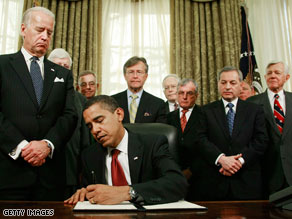
Our new President, Barack Obama, signing the order to close Guantanamo Bay. It's still pretty unreal that he is ACTUALLY OUR PRESIDENT!!!! I'm excited. Look how Presidental he looks!
Also, it looks like he's got a hook right-hand, which means that he is leaning right brained? You could say this is why he is so sensitive to the toils of others and the feelings in the country because he is more "intuitive," although it is obvious that he is also very analytical.
****
Oh crap, my mom pointed out he's a lefty. A hook lefty. That means he's left brained after all, nevermind everything I said up there.
13 November 2008
... Revolution?
Gerald Celente has predicted the there would be a revolution in America within the next four years punctuated by tax and job marches and food riots. Also lots of homeless people. He is supported by the British Ministry of Defense, which says that the middle class will take back their government as the disparity between the super rich and the rest of us grows. This person has supposedly predicted the fall of the Soviet Union, the 1987 Stock Market Crash, the 1997 Asian currency crisis, the sub prime mortage problem and devaluation of the dollar, and supposedly said this year would be known as "The Panic of 2008." The above linked article also lists a bunch of quotes from news sources attesting to his accuracy.
As we all know, Americans are generally an optimistic bunch, I think. Just ask someone how their day is, and even if its crappy, they'll say "good," right? So, as an American, I don't know how much of this I would like to believe, considering it is unpleasant. But, perhaps I will just stay in grad school and not make any risky job moves. I think colleges are generally pretty stable places to be in times of crisis. At least, that's what I would like to believe. I certainly don't want to become a squatter. What would I do with my cats?
All in all, this is not really the sort of revolution I would like, although I admit it is probably necessary. The food issue is especially poignant, and luckily, Obama has expressed interest in Michael Pollen's Resolarizing the Food System article. I guess everyone should rip up their sod and plant vegetables as soon as possible to become more self reliant. I doubt my landlord would go for that, though.
As we all know, Americans are generally an optimistic bunch, I think. Just ask someone how their day is, and even if its crappy, they'll say "good," right? So, as an American, I don't know how much of this I would like to believe, considering it is unpleasant. But, perhaps I will just stay in grad school and not make any risky job moves. I think colleges are generally pretty stable places to be in times of crisis. At least, that's what I would like to believe. I certainly don't want to become a squatter. What would I do with my cats?
All in all, this is not really the sort of revolution I would like, although I admit it is probably necessary. The food issue is especially poignant, and luckily, Obama has expressed interest in Michael Pollen's Resolarizing the Food System article. I guess everyone should rip up their sod and plant vegetables as soon as possible to become more self reliant. I doubt my landlord would go for that, though.
08 November 2008
Obamerican Update
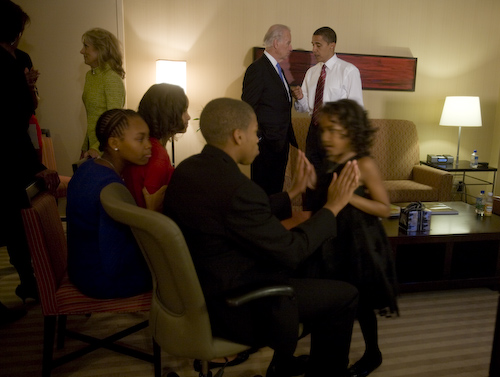
There are some updates regarding the upcoming OBAMA PRESIDENCY.
Here is a very good interview by Obama that showcases how thoughtful and determined he is in leading our country to a new, better place.
Here is the google books link to the first two chapters of The Plan by Rahm Emanuel and Bruce Reed. It lends some insight into how Obama and those in his campaign were thinking about running and convincing the American people to go Democrat. The chapters that are missing are about what democrats should do once they reach the White House, and might have some importance now that Rahm Emanuel is Obama's new chief of staff. The names of the chapters give a clue: Universal citizen service, universal college access, universal retirement savings, universal children's health care, fiscal responsibility & an end to corporate welfare, tax reform to help the non-wealthy, a new strategy against the war on terror, AND the hybrid economy! Sounds basically like Obama's platform to me! Looking good!
I would also like to point out that the Obama transition team has its own website now, change.gov. You have to admit, the combination of change and .gov is pretty... amusing, meaningful? Many emotions...
The Obama people have also posted a flickr slideshow of election night - the Obamas watching the results come in, watching the concession speech, congratulations, and then going to Grant Park.
04 November 2008
YaY! Election Day 08!

I actually already turned in my mail-in ballot here in Colorado last Friday. I checked on the county clerk's website, and it has been received!!! Today is an exciting day, but I assume exit polls can't tell us anything because of the vast numbers of people who have done early voting, or mail-in ballots. I would just like to point out that the ballot here in Colorado is the longest in the nation. It took forever to fill out. And also, you need to do your research about an initiative before you go to the polls, otherwise don't vote for it. In fact, take whatever information your state or county mailed you about the issues and read them in line!!! Otherwise, just fill in Barack Obama for president ;), and whatever other issues you are educated about, and that's fine!
I am actually planning on calling my grandparents and maybe some other choice relatives later this afternoon to ask if they voted. They probably want to hear from me anyways, so I figure its a good time to do it! Go vote! Don't be lazy! We're going to make history in our sheer turnout numbers, regardless of what the actual outcome is!
14 October 2008
Eat Sunlight, Not Oil
THE MOST IMPORTANT ARTICLE YOU WILL READ. Maybe not ever. But very important. This is not related to the most important video you will ever watch, over in the sidebar of the blog. Honestly, it is probably more important. ANYWAY. On To It.
My summary of important points in the article since it is long and I know people are lazy (you know who you are):
INTRO
Food policy has been focused over the last few decades on maximized food production. The policies of yesterday will no longer work today because we have the more complicated issues of health care, energy independence, and climate change to deal with, and they are all, SURPRISE!, interrelated. It turns out that the current food system uses 19% of the fossil fuels consumed in this country, and also releases ~37% of our greenhouse gases, which is more than any other sector. What has made our food so cheap in the recent past is this dependence on oil, which has lead to the production of chemical fertilizers, and pesticides, and allowed the use of machines and transportation to process and transport food. This all SUCKS because food is made from sunshine, dammit, the cleanest, freest, most abundant energy of all. Cheap, crappy, processed food is the cornerstone of the Western diet, AND is the sole cause of many of our problems, like obesity, diabetes, heart problems, etc. But you all knew that. So stop eating processed foods if you want to live and be healthy. AND good to the environment. One of the other problems with our food system is the transportation aspect, where we import a lot of our food, which leads to a problem in food security. The author notes that over 30 nations worldwide have had food riots in the past several months. So this ain't no joke. In short, we need to get people off of fossil fuels and back on sunshine.
BACKGROUND
Our food system provides cheap, abundant calories. The downside is low nutritional value. Cheap energy allowed for the creation of monocultures, where only corn and soy were grown, to the detriment of the diversity farmed in prior generations. This was the result of a series of government initiatives, whereby the WWII munitions industry was reworked to produce fertilizer and pesticides, and the government subsidized crops like corn, soybeans, wheat and rice. The government money allowed these grains to be sold cheaply. Animals could now be raised more cheaply on this cheap grain, and factory feedlots were born from factory farms. Animals, whose waste was once used as fertilizer and could till the feeds wi' their feets, now produced waste which became pollution, an ongoing problem. FURTHER, cheap energy made it economical to start shipping food around, all over the world, to be processed and consumed far from the fields. All in all, we're running out of cheap energy, so this process must change, regardless of how you feel about your health or the environment.
GOAL #1: Resolarizing the Farm
The good news!: The government has a lot of say in what happens in the fields. Right now, farmers can't receive government subsidies if they also grow "specialty" crops (ie anything with any nutritional value). What we are ignoring is that diversity on farms would make chemical fertilizers and pesticides less necessary. This is proven in smaller scale alternative farmers here, and in large scale productions in China and Argentina. There, farmers rotate fields between 5 years of grazing land for cattle, and 3 years of grain, without relying on any chemical fertilizer. The author suggests that subsidies be given to farmers based on the number of different crops they grow, or the number of days per year that their fields are green (farmers used to plant cover crops in the fall to retain fertility and reduce erosion).
Also, COMPOST! He suggests a municipal composting program which would benefit local farmers, AND cut down on landfill waste. He also mentions that research into perennial grains that can be grown like prairie grasses, which promotes biodiversity in the fields, and reduce the need to fertilize and till! (As I understand it, seed companies have been very into "annualizing" seeds so farmers have to buy every damn year). Animals and crops together again, circle of life!
 Animals right now live in what amounts to crowded cities of animals. Three things made this situation possible: the availability of grain which is cheaper to buy than grow, routine use of antibiotics to permit crowding, and the lack of waste treatment requirements by the feds. This permits factory farms to dump waste loaded with antibiotics, instead of requiring them to clean up their waste like any other industry. This situation is also a waste of water, as one pound of beef from these factories takes 5000 gal of water to produce. INSANE. The author also makes the case that meat is far too cheap now, and should cost the real price of raising a grass-fed, healthy animal, which would lead to less meat consumption, thereby transferring gains to our health, the environment and water conservation.
Will sustainable farming feed the world? Basically, it has to, because we have no choice. Organic farmers get 80 to 100% of conventional yields off their fields and significantly more during drought years. World agriculture is not yet at even these levels of productivity, and if we all were to apply these principles, food supply could increase by 50%. This type of farming is also complicated, and will require more farmers to be trained. The author suggests programs which will train a new generation of farmers in ecological farming - "more highly skilled small farmers in more places all across America." This would also include curbing out-of-control urban sprawl to save land for farming.
Idea #2: Regional Food Economy
We need to build the infrastructure to support regional, diverse food by supporting stores and markets that purchase locally. Regionally obtained food is fresher, requires less processing and engineering, and thus is more nutritious. Decentralizing the food system also protects our food system from threats and accidents that can contaminate our food supply. Luckily, this move towards regional food is already happening, with growing farmers markets and community-supported farms. The author suggests supporting this further with grants to build indoor farmers markets for year-round use, decreased regulations for smaller-scale operations and local meat-inspections agencies. He also suggests the government have a strategic grain reserve, like the one for oil; increase regional purchases of food within government agencies, like for school-lunch programs, prisons, and the military; and to redefine food as meaning something with nutritional value, which would effectively tax junk foods (Ha!).
Idea #3: FOOoood Culture
In order to make all this work, Americans need to be on board and stop eating crappy junk foods! We can create a healthy school lunch program. One of the cooler ideas is providing grants to culinary school graduates to work in a school lunch program and get real, healthy cooks in the kitchen. Public-health campaigns from the surgeon general about the dangers of unhealthy food would help curtail consumption, as it did for smoking. Food labels could even include that amount of oil wasted in the production of your food to promote eating low-energy-cost foods. A bar code system could also be used to call up data about a particular food source, such as pesticides used on plants and drugs used on animals. He also suggests cameras in the farms and slaughterhouses so that people are more connected to where their food comes from.
The President and White House chef should also provide guidance and set an example of healthy eating and living, with a chef's blog about recipes and where the food comes from. The author suggests tearing up part of the White House lawn to put in a garden, as Eleanor Roosevelt did in 1943. Back then, Americans followed suit, and by the end of WWII, a staggering 40% of produce was from home gardens. Excess crops could be donated to local charities and foodbanks. This self-reliance can be equated to home-schooling to gain support from conservatives who tout family values. Who doesn't love eating with the fam' around the kitchen table, anyway?
In the end, the author (Michael Pollan, I suppose I should mention his name), successfully argues that even though our food is cheap, it is "unconscionably expensive."
And even though this post is very long... I am going to post ONE MORE LINK to a picture and article about the dwindling water sources in America. The picture shows how draining the aquifer dropped the LEVEL OF THE GROUND by 30 feet. Unreal.
UPDATE: Here is another blog talking about Pollan's argument about meat consumption. He makes good points himself. Meat is not cheap. Also, I am posting a MUTTS comic strip the creator, Patrick McDonnell, is doing to promote awareness for Prop 2.
My summary of important points in the article since it is long and I know people are lazy (you know who you are):
INTRO
Food policy has been focused over the last few decades on maximized food production. The policies of yesterday will no longer work today because we have the more complicated issues of health care, energy independence, and climate change to deal with, and they are all, SURPRISE!, interrelated. It turns out that the current food system uses 19% of the fossil fuels consumed in this country, and also releases ~37% of our greenhouse gases, which is more than any other sector. What has made our food so cheap in the recent past is this dependence on oil, which has lead to the production of chemical fertilizers, and pesticides, and allowed the use of machines and transportation to process and transport food. This all SUCKS because food is made from sunshine, dammit, the cleanest, freest, most abundant energy of all. Cheap, crappy, processed food is the cornerstone of the Western diet, AND is the sole cause of many of our problems, like obesity, diabetes, heart problems, etc. But you all knew that. So stop eating processed foods if you want to live and be healthy. AND good to the environment. One of the other problems with our food system is the transportation aspect, where we import a lot of our food, which leads to a problem in food security. The author notes that over 30 nations worldwide have had food riots in the past several months. So this ain't no joke. In short, we need to get people off of fossil fuels and back on sunshine.
BACKGROUND
Our food system provides cheap, abundant calories. The downside is low nutritional value. Cheap energy allowed for the creation of monocultures, where only corn and soy were grown, to the detriment of the diversity farmed in prior generations. This was the result of a series of government initiatives, whereby the WWII munitions industry was reworked to produce fertilizer and pesticides, and the government subsidized crops like corn, soybeans, wheat and rice. The government money allowed these grains to be sold cheaply. Animals could now be raised more cheaply on this cheap grain, and factory feedlots were born from factory farms. Animals, whose waste was once used as fertilizer and could till the feeds wi' their feets, now produced waste which became pollution, an ongoing problem. FURTHER, cheap energy made it economical to start shipping food around, all over the world, to be processed and consumed far from the fields. All in all, we're running out of cheap energy, so this process must change, regardless of how you feel about your health or the environment.
GOAL #1: Resolarizing the Farm
The good news!: The government has a lot of say in what happens in the fields. Right now, farmers can't receive government subsidies if they also grow "specialty" crops (ie anything with any nutritional value). What we are ignoring is that diversity on farms would make chemical fertilizers and pesticides less necessary. This is proven in smaller scale alternative farmers here, and in large scale productions in China and Argentina. There, farmers rotate fields between 5 years of grazing land for cattle, and 3 years of grain, without relying on any chemical fertilizer. The author suggests that subsidies be given to farmers based on the number of different crops they grow, or the number of days per year that their fields are green (farmers used to plant cover crops in the fall to retain fertility and reduce erosion).
Also, COMPOST! He suggests a municipal composting program which would benefit local farmers, AND cut down on landfill waste. He also mentions that research into perennial grains that can be grown like prairie grasses, which promotes biodiversity in the fields, and reduce the need to fertilize and till! (As I understand it, seed companies have been very into "annualizing" seeds so farmers have to buy every damn year). Animals and crops together again, circle of life!
 Animals right now live in what amounts to crowded cities of animals. Three things made this situation possible: the availability of grain which is cheaper to buy than grow, routine use of antibiotics to permit crowding, and the lack of waste treatment requirements by the feds. This permits factory farms to dump waste loaded with antibiotics, instead of requiring them to clean up their waste like any other industry. This situation is also a waste of water, as one pound of beef from these factories takes 5000 gal of water to produce. INSANE. The author also makes the case that meat is far too cheap now, and should cost the real price of raising a grass-fed, healthy animal, which would lead to less meat consumption, thereby transferring gains to our health, the environment and water conservation.
Will sustainable farming feed the world? Basically, it has to, because we have no choice. Organic farmers get 80 to 100% of conventional yields off their fields and significantly more during drought years. World agriculture is not yet at even these levels of productivity, and if we all were to apply these principles, food supply could increase by 50%. This type of farming is also complicated, and will require more farmers to be trained. The author suggests programs which will train a new generation of farmers in ecological farming - "more highly skilled small farmers in more places all across America." This would also include curbing out-of-control urban sprawl to save land for farming.
Idea #2: Regional Food Economy
We need to build the infrastructure to support regional, diverse food by supporting stores and markets that purchase locally. Regionally obtained food is fresher, requires less processing and engineering, and thus is more nutritious. Decentralizing the food system also protects our food system from threats and accidents that can contaminate our food supply. Luckily, this move towards regional food is already happening, with growing farmers markets and community-supported farms. The author suggests supporting this further with grants to build indoor farmers markets for year-round use, decreased regulations for smaller-scale operations and local meat-inspections agencies. He also suggests the government have a strategic grain reserve, like the one for oil; increase regional purchases of food within government agencies, like for school-lunch programs, prisons, and the military; and to redefine food as meaning something with nutritional value, which would effectively tax junk foods (Ha!).
Idea #3: FOOoood Culture
In order to make all this work, Americans need to be on board and stop eating crappy junk foods! We can create a healthy school lunch program. One of the cooler ideas is providing grants to culinary school graduates to work in a school lunch program and get real, healthy cooks in the kitchen. Public-health campaigns from the surgeon general about the dangers of unhealthy food would help curtail consumption, as it did for smoking. Food labels could even include that amount of oil wasted in the production of your food to promote eating low-energy-cost foods. A bar code system could also be used to call up data about a particular food source, such as pesticides used on plants and drugs used on animals. He also suggests cameras in the farms and slaughterhouses so that people are more connected to where their food comes from.
The President and White House chef should also provide guidance and set an example of healthy eating and living, with a chef's blog about recipes and where the food comes from. The author suggests tearing up part of the White House lawn to put in a garden, as Eleanor Roosevelt did in 1943. Back then, Americans followed suit, and by the end of WWII, a staggering 40% of produce was from home gardens. Excess crops could be donated to local charities and foodbanks. This self-reliance can be equated to home-schooling to gain support from conservatives who tout family values. Who doesn't love eating with the fam' around the kitchen table, anyway?
In the end, the author (Michael Pollan, I suppose I should mention his name), successfully argues that even though our food is cheap, it is "unconscionably expensive."
And even though this post is very long... I am going to post ONE MORE LINK to a picture and article about the dwindling water sources in America. The picture shows how draining the aquifer dropped the LEVEL OF THE GROUND by 30 feet. Unreal.
UPDATE: Here is another blog talking about Pollan's argument about meat consumption. He makes good points himself. Meat is not cheap. Also, I am posting a MUTTS comic strip the creator, Patrick McDonnell, is doing to promote awareness for Prop 2.
10 October 2008
Yay! These are OUR lakes, bitches!
The Great Lakes-St. Lawrence River Basin Compact has successfully been passed, ensuring responsible regulation of their waters by the bordering states, and to prevent the water from being stolen by remote cities/states, like what has happened to the Colorado River. The National Wildlife Federation has more information about conservation in the Great Lakes region.
I took a limnology class in college, which was very interesting, and we learned about things like this, as well as other super interesting things. I actually thought about going into it for a while, but the actual work didn't seem very exciting. Not that sittin in a lab all day growing up and crystallizing proteins is, but whatever.
IN ADDITION, NWF has answers to important conservation issues by the presidential candidates. They are limited to 200 words per answer, so its not terribly heavy reading. Just looking at it, it appears as though Obama has given longer, but more thoughtful answers, with actual policies stated! So, yay. Obama believes in conservation!!! The last question asks what animal they would want to be; McCain answers a jaguar, but sadly, Obama doesn't answer directly :/
I took a limnology class in college, which was very interesting, and we learned about things like this, as well as other super interesting things. I actually thought about going into it for a while, but the actual work didn't seem very exciting. Not that sittin in a lab all day growing up and crystallizing proteins is, but whatever.
IN ADDITION, NWF has answers to important conservation issues by the presidential candidates. They are limited to 200 words per answer, so its not terribly heavy reading. Just looking at it, it appears as though Obama has given longer, but more thoughtful answers, with actual policies stated! So, yay. Obama believes in conservation!!! The last question asks what animal they would want to be; McCain answers a jaguar, but sadly, Obama doesn't answer directly :/
09 October 2008
Back Off Man, I'm a Scientist

Don't piss scientists off. McCain did when he said he said it was a waste of money to fund a planetarium in Chicago. Granted, I expect that most scientists weren't planning on voting for McCain anyway, but its not really in your best interest to piss them off when the US is trailing behind other nations in science and math education, and there are Universities and opportunities abroad for bright minds. Did I mention I was thinking about picking up and leaving for Montreal if McCain wins? That is, unless martial law is somehow declared and our borders are closed. More about what I've learned about that later... if I really want to seal my place on the no-fly list.
If you click on the picture, it takes you to the website where you can donate to fund the Sky Theater Projector, which actually never received the funds McCain was talking about.
02 October 2008
27 September 2008
Brain-exert
Some thought-provoking articles:
Nietzsche on Christianity I mean to read some Nietzsche. I understand there is some connotation about him among people, but I don't know what it is. Just that its there. On the subject of religion in general, I am sort of confused about the whole thing right now. I am having troubles distinguishing between what I would like to be true and what I actually believe. I mean, who doesn't like the idea of heaven? I don't want to be annihilated when I die. Does that mean I believe in heaven? Probably not. It's sort of a silly idea, unfortunately. Nice, but silly. Like unicorns and pegasuses, and dragons. I think a general difficulty with people and religion is this distinction between what we would like to believe and what we actually believe. There is a difference. I think it's a right brain/ left brain thing. People generally act on right brain impulses, so maybe that's what really matters?
Jonathan Haidt on why people vote Republican This is a long article, but I suggest reading through it. It has suggestions to liberals for appealing to more conservative-minded people through certain values that we don't often talk about. I don't like the article in that it seems obviously calculating, like we should only do this to get votes, instead of just suggesting that we talk about issues differently so that people of a different mind understand us better. Communication over calculation.
My synopsis of what we are missing:
ingroup/loyalty value: We pursue social justice because everyone has a right to be an American, to pursue the American dream (instead of it only being the right thing to do). We want to include everyone! Coherence to maintaining the American dream.
purity/sanctity value: We must overcome our base materialistic desires and promote reverence of Nature
authority/respect: We will maintain order by promoting personal responsibility and respect for the rules. Be hard on those who misuse the system for personal benefit.
The author also has a website where you can test which parts of the "moral spectra" are important to you. I am apparently more liberal than the average liberal on situations concerning harm and fairness. And slightly more conservative than the average liberal on issues of loyalty and authority. Run of the mill liberal on the purity scale. Perhaps it is best for all of you if you take the test before you weave your way through the article, just the hypotheses don't affect your answers.
Feel free to discuss any of this in the comments!
Nietzsche on Christianity I mean to read some Nietzsche. I understand there is some connotation about him among people, but I don't know what it is. Just that its there. On the subject of religion in general, I am sort of confused about the whole thing right now. I am having troubles distinguishing between what I would like to be true and what I actually believe. I mean, who doesn't like the idea of heaven? I don't want to be annihilated when I die. Does that mean I believe in heaven? Probably not. It's sort of a silly idea, unfortunately. Nice, but silly. Like unicorns and pegasuses, and dragons. I think a general difficulty with people and religion is this distinction between what we would like to believe and what we actually believe. There is a difference. I think it's a right brain/ left brain thing. People generally act on right brain impulses, so maybe that's what really matters?
Jonathan Haidt on why people vote Republican This is a long article, but I suggest reading through it. It has suggestions to liberals for appealing to more conservative-minded people through certain values that we don't often talk about. I don't like the article in that it seems obviously calculating, like we should only do this to get votes, instead of just suggesting that we talk about issues differently so that people of a different mind understand us better. Communication over calculation.
My synopsis of what we are missing:
ingroup/loyalty value: We pursue social justice because everyone has a right to be an American, to pursue the American dream (instead of it only being the right thing to do). We want to include everyone! Coherence to maintaining the American dream.
purity/sanctity value: We must overcome our base materialistic desires and promote reverence of Nature
authority/respect: We will maintain order by promoting personal responsibility and respect for the rules. Be hard on those who misuse the system for personal benefit.
The author also has a website where you can test which parts of the "moral spectra" are important to you. I am apparently more liberal than the average liberal on situations concerning harm and fairness. And slightly more conservative than the average liberal on issues of loyalty and authority. Run of the mill liberal on the purity scale. Perhaps it is best for all of you if you take the test before you weave your way through the article, just the hypotheses don't affect your answers.
Feel free to discuss any of this in the comments!
26 September 2008
Best Shit Ever

Spoof on the New Yorker cover. Colbert is looking very cheeky here. If you don't know what this refers to, ask anyone off the street.
25 September 2008
The Birthplace of the Progressive Movement
Apparently, Wisconsin lays claim that it was the birthplace of the Progressive Movement. If true, it would be another source of pride of mine for my birth state. Obama mentioned it at a rally in Green Bay on Monday, and I thought I would check out if it was true!
The big guy in the Wisconsin progressive movement was Robert "Fighting Bob" La Follette, who was a governor and senator in the early 20th century. He and the chancellor of UW forged the Wisconsin Idea, which means that the University would be instrumental in forging policies and improving the lives of everyone around the state. Professors at UW were involved in much of the legislature that the Progressive movement is based on. (Even though the University still upholds the Wisconsin Idea, they do so only in the sense that "the boundaries of the University are the boundaries of the state." I think the profs should be involved in the legislature again!) Unfortunately, it seems as though we are fighting for the same things now as they were a century ago. Not much in the way of progress. In any case, La Follette was tied for first in a 1982 historian's survey for the Greatest Senators in American History. I'm sure he's still up there somewhere, 16 years later.
SO. Is Wisconsin the birthplace of the Progressive Movement? Might as well be. Perhaps if people realized this, they wouldn't lump us all as backwards hicks. When people say something like that to me along those lines, I say, "Have you ever BEEN to Madison?!" Srsly.
Some excellent quotes by Robert La Follette, which can still be applied today:
* "The will of the people shall be the law of the land."
* "In times of peace, the war party insists on making preparation for war. As soon as prepared for, it insists on making war."
* "The purpose of this ridiculous campaign is to throw the country into a state of sheer terror, to change public opinion, to stifle criticism, and suppress discussion. People are being unlawfully arrested, thrown into jail, held incommunicado for days, only to be eventually discharged without ever having been taken into court, because they have committed no crime. But more than this, if every preparation for war can be made the excuse for destroying free speech and a free press and the right of the people to assemble together for peaceful discussion, then we may well despair of ever again finding ourselves for a long period in a state of peace. The destruction of rights now occurring will be pointed to then as precedents for a still further invasion of the rights of the citizen."
* "America is not made, it is in the making. Mere passive citizenship is not enough. Men must be aggressive for what is right if government is to be saved from those who are aggressive for what is wrong."
ON WISCONSIN!
The big guy in the Wisconsin progressive movement was Robert "Fighting Bob" La Follette, who was a governor and senator in the early 20th century. He and the chancellor of UW forged the Wisconsin Idea, which means that the University would be instrumental in forging policies and improving the lives of everyone around the state. Professors at UW were involved in much of the legislature that the Progressive movement is based on. (Even though the University still upholds the Wisconsin Idea, they do so only in the sense that "the boundaries of the University are the boundaries of the state." I think the profs should be involved in the legislature again!) Unfortunately, it seems as though we are fighting for the same things now as they were a century ago. Not much in the way of progress. In any case, La Follette was tied for first in a 1982 historian's survey for the Greatest Senators in American History. I'm sure he's still up there somewhere, 16 years later.
SO. Is Wisconsin the birthplace of the Progressive Movement? Might as well be. Perhaps if people realized this, they wouldn't lump us all as backwards hicks. When people say something like that to me along those lines, I say, "Have you ever BEEN to Madison?!" Srsly.
Some excellent quotes by Robert La Follette, which can still be applied today:
* "The will of the people shall be the law of the land."
* "In times of peace, the war party insists on making preparation for war. As soon as prepared for, it insists on making war."
* "The purpose of this ridiculous campaign is to throw the country into a state of sheer terror, to change public opinion, to stifle criticism, and suppress discussion. People are being unlawfully arrested, thrown into jail, held incommunicado for days, only to be eventually discharged without ever having been taken into court, because they have committed no crime. But more than this, if every preparation for war can be made the excuse for destroying free speech and a free press and the right of the people to assemble together for peaceful discussion, then we may well despair of ever again finding ourselves for a long period in a state of peace. The destruction of rights now occurring will be pointed to then as precedents for a still further invasion of the rights of the citizen."
* "America is not made, it is in the making. Mere passive citizenship is not enough. Men must be aggressive for what is right if government is to be saved from those who are aggressive for what is wrong."
ON WISCONSIN!
13 September 2008
Ah, Jonny Stewart. On McCain
HILARIOUS
This whole video is funny... But if youre in a crunch, just skip to minute 3. SO FUNNY
There is also a really funny section at the end about small town values and none of the people they show at the RNC could really say what that meant. Whole show here. Especially funny is the blatantly flaming Repub who is against gay marriage. Poor guy's never gonna be happy.
This whole video is funny... But if youre in a crunch, just skip to minute 3. SO FUNNY
There is also a really funny section at the end about small town values and none of the people they show at the RNC could really say what that meant. Whole show here. Especially funny is the blatantly flaming Repub who is against gay marriage. Poor guy's never gonna be happy.
09 September 2008
Quarter Life Crisis & STUFF
Good.
I have resumed my suspended quarter-life crisis. Now that grad school has settled down slightly, I can go back to figuring out if I even want to be here. Or what I would want to do if I weren't here. It's all very depressing and I don't really feel like talking about it. Mostly, I want to sit around all day and sigh. Strangely enough, a great trip to Wisco and Chi-town seems to have prompted this. Life is so bi-polar.
BTW, my cousin Katie and Wyatt's wedding was the best wedding EVER. I suppose I will post my door-knocker present process that I made for them. Except I am supposed to go to work, and not be sitting around in a bathrobe blogging (& sighing).
I have resumed my suspended quarter-life crisis. Now that grad school has settled down slightly, I can go back to figuring out if I even want to be here. Or what I would want to do if I weren't here. It's all very depressing and I don't really feel like talking about it. Mostly, I want to sit around all day and sigh. Strangely enough, a great trip to Wisco and Chi-town seems to have prompted this. Life is so bi-polar.
BTW, my cousin Katie and Wyatt's wedding was the best wedding EVER. I suppose I will post my door-knocker present process that I made for them. Except I am supposed to go to work, and not be sitting around in a bathrobe blogging (& sighing).
03 September 2008
Bunch of Good Things
Awesome
Pretty damn cool
This will only make sense if you know the Disturbed song. Just know this is awesome.
Obama's answers to sciencey questions
17 August 2008
But, John, I barely know you!

THIS is a very good article. I agree whole-heartedly that we need to look more closely at what McCain has done recently rather than these past half-formed opinions. Seriously, if anyone's seen uncut footage of him answering questions, they would realize his mind is going and he stumbles over his words and forgets things. I know this is old news, but the incident I have in mind is where he was being asked about his position on birth control and a bill that would require insurance companies to cover it, and he couldn't recall the votes OR even come up with a well-formed opinion on the spot.
I have this general idea of lack-of-action on his part. He hasn't even shown up to vote for any of the recent energy bill legislation. Apparently he was even in Washington for one of them, but wouldn't leave his office (don't remember where I heard that one). I feel like if he were elected, it would be sort of like when one of your grandparents starts getting on in the years and you have to help them with all sorts of menial tasks. Really, who would actually be running this country if he won?
McCain answering the birth control vs Viagra question:
28 July 2008
McCain Is Scared!
So, McCain has lowered himself to attacking Barack's person, saying he would rather win an election than a war. First of all, I don't remember McCain being so petty in the past. Some politicos on a Sunday morning news show I was watching agree with me - that this sort of thing is below the old McCain. Unfortunately, he has centered his new ads around this idea - playing into Americans fear of "the other." I think this is pathetic and it saddens me. Hopefully it will really only resound with the backwater hicks that would have voted for McCain anyway. Honestly, I don't really think of him as much of a war hero anyway, since he sucked at flying and graduated at the very bottom of his class at the Academy. He was probably a cocky asshole when he was young anyway.
ANYWAY. This is all besides the fact that I'm not even sure if this counts as a war right now. What constitutes a war? Isn't this just an occupation almost? Didn't Bush already declare victory for the "war"? I'm not sure if this "war" can be won anyway, its not like you can wipe all the violent people in the world out. I don't think there will ever be an end to violence over there.
ANYWAY. This is all besides the fact that I'm not even sure if this counts as a war right now. What constitutes a war? Isn't this just an occupation almost? Didn't Bush already declare victory for the "war"? I'm not sure if this "war" can be won anyway, its not like you can wipe all the violent people in the world out. I don't think there will ever be an end to violence over there.
25 July 2008
O-BAM
I love Jon Stewart.
Also, McCain is just coming off as a sore loser, an angry old man. That's the way I see it, at least.
Subscribe to:
Posts (Atom)