THE MOST IMPORTANT ARTICLE YOU WILL READ. Maybe not ever. But very important. This is not related to the most important video you will ever watch, over in the sidebar of the blog. Honestly, it is probably more important. ANYWAY. On To It.
My summary of important points in the article since it is long and I know people are lazy (you know who you are):
INTROFood policy has been focused over the last few decades on maximized food production. The policies of yesterday will no longer work today because we have the more complicated issues of health care, energy independence, and climate change to deal with, and they are all, SURPRISE!, interrelated. It turns out that the current food system uses 19% of the fossil fuels consumed in this country, and also releases ~37% of our greenhouse gases, which is more than any other sector. What has made our food so cheap in the recent past is this dependence on oil, which has lead to the production of chemical fertilizers, and pesticides, and allowed the use of machines and transportation to process and transport food. This all SUCKS because food is made from sunshine, dammit, the cleanest, freest, most abundant energy of all. Cheap, crappy, processed food is the cornerstone of the Western diet, AND is the sole cause of many of our problems, like obesity, diabetes, heart problems, etc. But you all knew that. So stop eating processed foods if you want to live and be healthy. AND good to the environment. One of the other problems with our food system is the transportation aspect, where we import a lot of our food, which leads to a problem in food security. The author notes that over 30 nations worldwide have had food riots in the past several months. So this ain't no joke. In short, we need to get people off of fossil fuels and back on sunshine.
BACKGROUNDOur food system provides cheap, abundant calories. The downside is low nutritional value. Cheap energy allowed for the creation of monocultures, where only corn and soy were grown, to the detriment of the diversity farmed in prior generations. This was the result of a series of government initiatives, whereby the WWII munitions industry was reworked to produce fertilizer and pesticides, and the government subsidized crops like corn, soybeans, wheat and rice. The government money allowed these grains to be sold cheaply. Animals could now be raised more cheaply on this cheap grain, and factory feedlots were born from factory farms. Animals, whose waste was once used as fertilizer and could till the feeds wi' their feets, now produced waste which became pollution, an ongoing problem. FURTHER, cheap energy made it economical to start shipping food around, all over the world, to be processed and consumed far from the fields. All in all, we're running out of cheap energy, so this process must change, regardless of how you feel about your health or the environment.
GOAL #1: Resolarizing the Farm
The good news!: The government has a lot of say in what happens in the fields. Right now, farmers can't receive government subsidies if they also grow "specialty" crops (ie anything with any nutritional value). What we are ignoring is that diversity on farms would make chemical fertilizers and pesticides less necessary. This is proven in smaller scale alternative farmers here, and in large scale productions in China and Argentina. There, farmers rotate fields between 5 years of grazing land for cattle, and 3 years of grain, without relying on any chemical fertilizer. The author suggests that subsidies be given to farmers based on the number of different crops they grow, or the number of days per year that their fields are green (farmers used to plant cover crops in the fall to retain fertility and reduce erosion).
Also, COMPOST! He suggests a municipal composting program which would benefit local farmers, AND cut down on landfill waste. He also mentions that research into perennial grains that can be grown like prairie grasses, which promotes biodiversity in the fields, and reduce the need to fertilize and till! (As I understand it, seed companies have been very into "annualizing" seeds so farmers have to buy every damn year). Animals and crops together again, circle of life!

Animals right now live in what amounts to crowded cities of animals. Three things made this situation possible: the availability of grain which is cheaper to buy than grow, routine use of antibiotics to permit crowding, and the lack of waste treatment requirements by the feds. This permits factory farms to dump waste loaded with antibiotics, instead of requiring them to clean up their waste like any other industry. This situation is also a waste of water, as one pound of beef from these factories takes 5000 gal of water to produce. INSANE. The author also makes the case that meat is far too cheap now, and should cost the real price of raising a grass-fed, healthy animal, which would lead to less meat consumption, thereby transferring gains to our health, the environment and water conservation.
Will sustainable farming feed the world? Basically, it has to, because we have no choice. Organic farmers get 80 to 100% of conventional yields off their fields and significantly more during drought years. World agriculture is not yet at even these levels of productivity, and if we all were to apply these principles, food supply could increase by 50%. This type of farming is also complicated, and will require more farmers to be trained. The author suggests programs which will train a new generation of farmers in ecological farming - "more highly skilled small farmers in more places all across America." This would also include curbing out-of-control urban sprawl to save land for farming.
Idea #2: Regional Food Economy
We need to build the infrastructure to support regional, diverse food by supporting stores and markets that purchase locally. Regionally obtained food is fresher, requires less processing and engineering, and thus is more nutritious. Decentralizing the food system also protects our food system from threats and accidents that can contaminate our food supply. Luckily, this move towards regional food is already happening, with growing farmers markets and community-supported farms. The author suggests supporting this further with grants to build indoor farmers markets for year-round use, decreased regulations for smaller-scale operations and local meat-inspections agencies. He also suggests the government have a strategic grain reserve, like the one for oil; increase regional purchases of food within government agencies, like for school-lunch programs, prisons, and the military; and to redefine food as meaning something with nutritional value, which would effectively tax junk foods (Ha!).
Idea #3: FOOoood Culture
In order to make all this work, Americans need to be on board and stop eating crappy junk foods! We can create a healthy school lunch program. One of the cooler ideas is providing grants to culinary school graduates to work in a school lunch program and get real, healthy cooks in the kitchen. Public-health campaigns from the surgeon general about the dangers of unhealthy food would help curtail consumption, as it did for smoking. Food labels could even include that amount of oil wasted in the production of your food to promote eating low-energy-cost foods. A bar code system could also be used to call up data about a particular food source, such as pesticides used on plants and drugs used on animals. He also suggests cameras in the farms and slaughterhouses so that people are more connected to where their food comes from.
The President and White House chef should also provide guidance and set an example of healthy eating and living, with a chef's blog about recipes and where the food comes from. The author suggests tearing up part of the White House lawn to put in a garden, as Eleanor Roosevelt did in 1943. Back then, Americans followed suit, and by the end of WWII, a staggering 40% of produce was from home gardens. Excess crops could be donated to local charities and foodbanks. This self-reliance can be equated to home-schooling to gain support from conservatives who tout family values. Who doesn't love eating with the fam' around the kitchen table, anyway?
In the end, the author (Michael Pollan, I suppose I should mention his name), successfully argues that even though our food is cheap, it is "unconscionably expensive."
And even though this post is very long... I am going to post
ONE MORE LINK to a picture and article about the dwindling water sources in America. The picture shows how draining the aquifer dropped the LEVEL OF THE GROUND by 30 feet. Unreal.
UPDATE:
Here is another blog talking about Pollan's argument about meat consumption. He makes good points himself. Meat is not cheap. Also, I am posting a
MUTTS comic strip the creator, Patrick McDonnell, is doing to promote awareness for Prop 2.


 Animals right now live in what amounts to crowded cities of animals. Three things made this situation possible: the availability of grain which is cheaper to buy than grow, routine use of antibiotics to permit crowding, and the lack of waste treatment requirements by the feds. This permits factory farms to dump waste loaded with antibiotics, instead of requiring them to clean up their waste like any other industry. This situation is also a waste of water, as one pound of beef from these factories takes 5000 gal of water to produce. INSANE. The author also makes the case that meat is far too cheap now, and should cost the real price of raising a grass-fed, healthy animal, which would lead to less meat consumption, thereby transferring gains to our health, the environment and water conservation.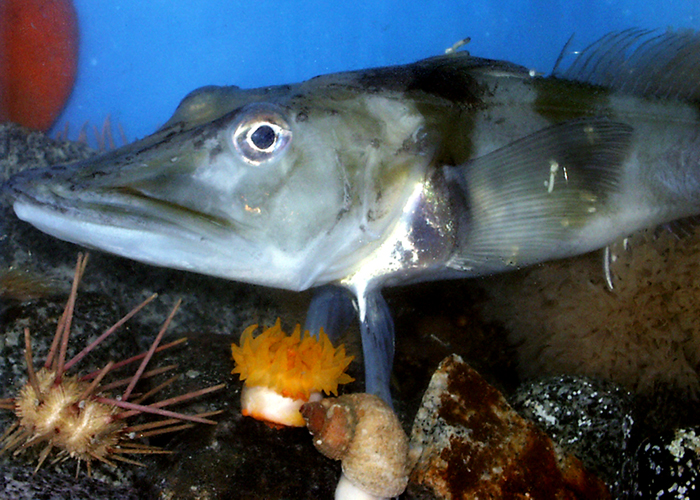
 Second! Some sweet-ass fishes that live 5 miles beneath the surface of the ocean! They were captured on video tape swimmin' around and bein' cute, much more actively than you would expect these deep-sea fishes to be. These are the deepest fish ever captured on tape! They "see" with little vibration sensors on their noses. They kind of look like big tadpoles. Anyway, the incredible thing about them is the PRESSURE on their little heads! I personally calculated the pressure at 7.7 km for you, and I came up with roughly 746 atm! OR 75561325 Pa! Which is nearly 11000 pounds per sq inch!!!! Amazing adaption. (You are all free to check that calculation. I readily admit I do not often do fluid statics calcs) I also want to mention that when they tried to bring one up to the surface a while ago, it died before it got there, so maybe it NEEDS this pressure, OR they weren't very gentle with it on the 5 mi elevator ride up!
